
Democracy in Motion: Empowering Young People to Shape Democracy
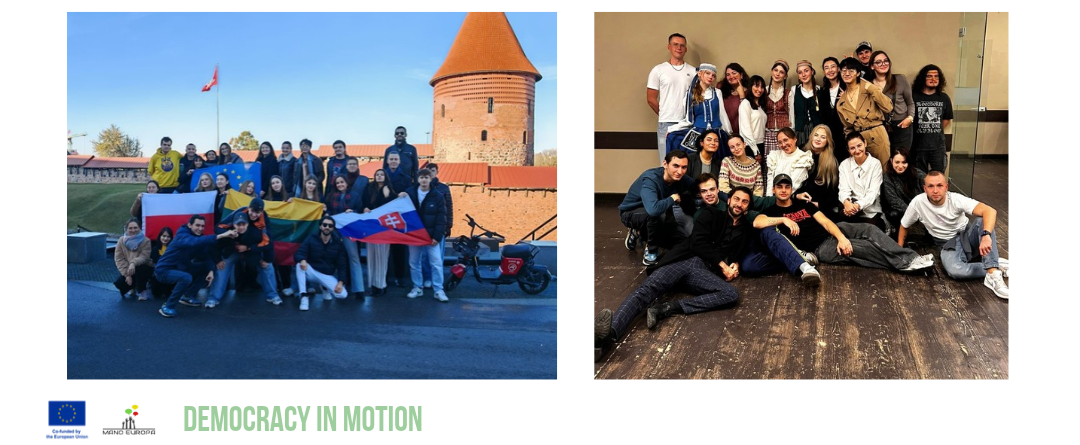
Democracy is more than elections and political institutions – it is also about having a voice, being heard, and taking an active role in shaping the society we live in. The Erasmus+ project Democracy in Motion brought 30 young people from across Europe together to explore democratic participation, exchange perspectives, and discover how they can contribute to more inclusive and engaged communities.
Bringing young people together across Europe
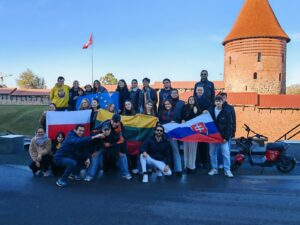
Implemented in Kaunas, Lithuania, from 14 to 21 October 2025, the Democracy in Motion youth exchange brought together young people and group leaders from six countries: Lithuania, Estonia, Slovakia, Italy, Poland and Spain.
The project aimed to encourage young people to become more actively involved in democratic processes and decisions that affect their lives. By creating an international learning environment, it offered participants an opportunity to share experiences, discuss challenges facing their communities, and learn from different cultural and social perspectives.
Learning democracy through participation
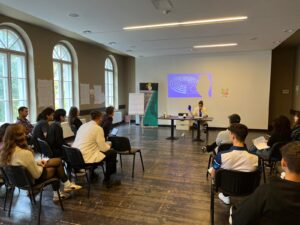
Democratic participation becomes meaningful when people have the knowledge, confidence, and skills to turn their ideas into action. Through non-formal education and interactive learning, Democracy in Motion focused on strengthening young people’s understanding of democratic processes and their role as active citizens.
The project encouraged participants to develop their communication skills, engage in dialogue, collaborate with others, and explore ways to connect young people with decision-makers. It also highlighted the importance of using digital tools, social media, and awareness-raising initiatives to communicate ideas and encourage civic engagement.
By exchanging perspectives with peers from other countries, participants could reflect on the opportunities and challenges young people face when trying to influence decisions in their communities.
From individual voices to collective action
One of the key messages of Democracy in Motion is that young people should not be viewed only as future citizens — they are citizens today, with ideas, experiences, and perspectives that deserve to be taken seriously.
Meaningful youth participation requires opportunities for young people to express their opinions, engage in constructive dialogue, cooperate with public authorities, and contribute to decisions that shape their future. Creating these opportunities helps build trust, strengthen democratic culture, and make communities more inclusive.
The project also encouraged participants to share what they learned with others and explore ways to bring democratic participation closer to their local communities.
Building connections and a shared European perspective
Beyond developing practical skills, the international exchange provided space for intercultural dialogue, cooperation, and mutual understanding. Meeting people with different backgrounds and experiences helped participants broaden their perspectives and recognise the value of listening to others.
These connections are an important part of European cooperation. When young people come together across borders, they can learn from one another, challenge assumptions, and discover shared aspirations for a more democratic and inclusive Europe.
Continuing the movement beyond the project
Democracy in Motion reflects the importance of investing in young people’s civic competences and creating accessible opportunities for participation. Its message extends beyond the duration of a single youth exchange: democracy is strengthened whenever people engage, listen, cooperate, and take responsibility for their communities.
By supporting young people in developing the confidence and skills to participate actively, Erasmus+ projects contribute to a Europe in which youth voices are recognised as an essential part of democratic life.

Democracy in Motion is a project by the European Union. Views and opinions expressed are however those of the author(s) only and do not necessarily reflect those of the European Union or National Agency. Neither the European Union nor the granting authority can be held responsible for them.


